
Richard Crist
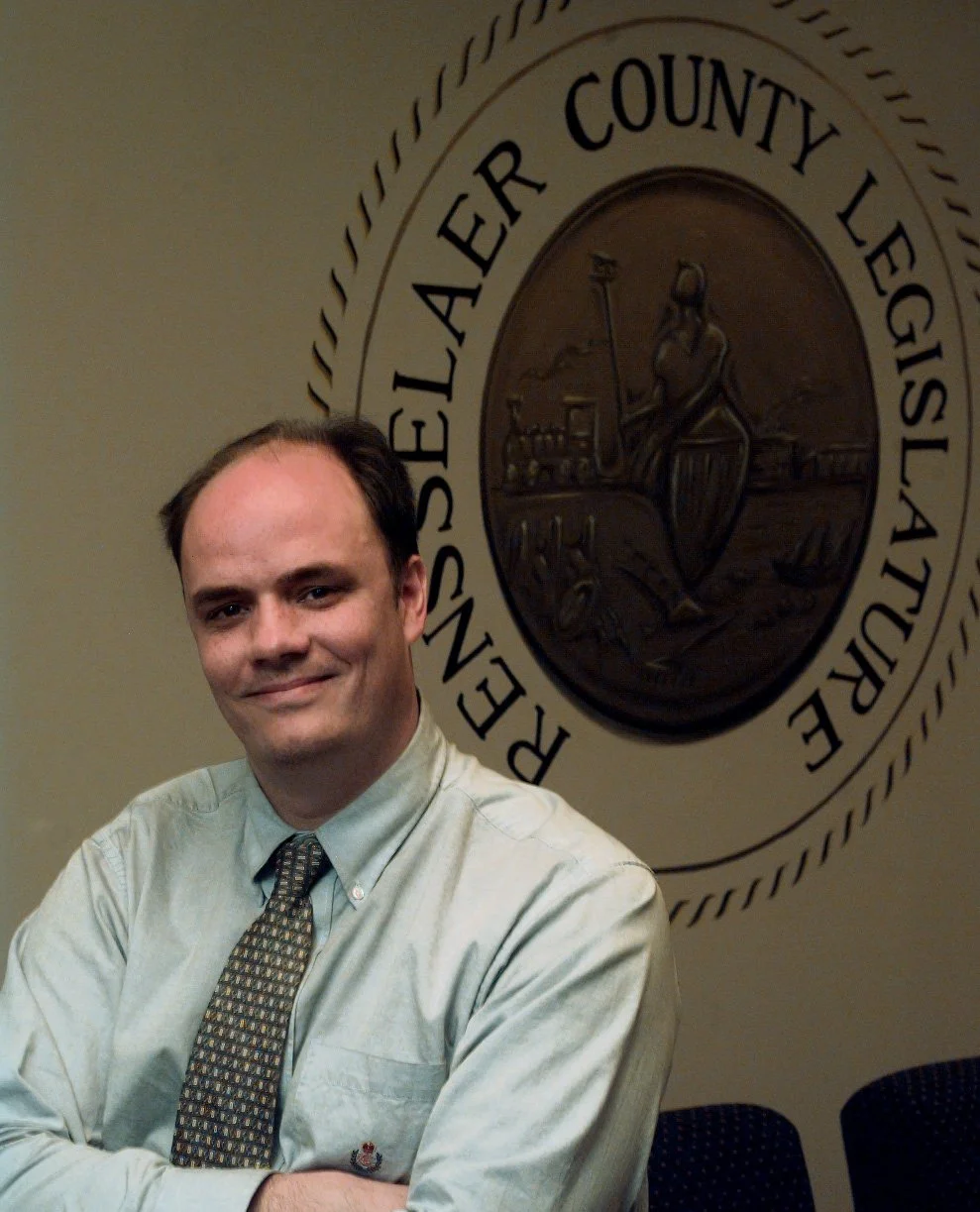
For more than seven years, Republican political operative Richard Crist was the target of overlapping state and federal investigations that ultimately collapsed in court. The record shows a pattern of politically driven law enforcement, coordinated pressure, and legally unsound prosecution theories used against Crist and other Rensselaer County Republicans—none of which resulted in a conviction.
1. Origins of the Case
Crist first became entangled in the New York Attorney General’s long-running campaign against Rensselaer County Executive Steve McLaughlin, a prominent Republican who clashed publicly with Governor Andrew Cuomo during the COVID nursing-home scandal. The AG charged McLaughlin with “grand larceny” in 2021, rooted in a $5,000 political payment to Crist and a private $3,500 debt settlement between Crist and a former staffer.
Despite being portrayed as central to the alleged scheme, Crist was never interviewed, never charged, and no evidence supported a larceny theory.
In 2023, a jury acquitted McLaughlin in minutes—effectively gutting the narrative that Crist had participated in wrongdoing.
2. Federal Indictment on a “Novel” Theory
Federal prosecutors then shifted focus to Crist, charging him—along with James Gordon and Leslie Wallace—with a “Conspiracy Against Rights” felony related to absentee ballot handling during the 2021 local-only elections.
Prosecutors admitted this was a “novel theory” and the first such case in the district, despite existing case law (Judge Victor Bolden, Connecticut) establishing no federal jurisdiction when no federal races appear on the ballot.
On September 25, 2024, a federal jury acquitted Crist, Gordon, and Wallace on all counts.
3. Mirrored State–Federal Pressure
Throughout the federal case, the New York Attorney General’s office issued state subpoenas that mirrored the federal subpoenas, with no clear independent state-law purpose. This created:
Parallel pressure on the same Republican targets
Repeated negative media coverage, especially through the Albany Times Union
Increased legal cost and intimidation for witnesses and defendants
The coordinated timing and content of the subpoenas strongly suggested that the AG’s office was reinforcing the federal prosecution to maximize leverage and negative publicity.
4. Selective Enforcement
Evidence showed profound selectivity:
A blatant absentee-ballot fraud involving a coma patient, tied to a Democratic operative, was ignored by federal authorities.
Republican voters and operatives were interrogated repeatedly—some up to ten times.
Witnesses reported harassment and pressure tactics, describing FBI and DOJ conduct as coercive.
The AG framed unrelated early-voting disputes as Republican wrongdoing, despite Democratic election officials causing the issue.
This pattern pointed toward a one-sided, politically motivated use of prosecutorial power.
5. Human and Financial Cost
Crist spent seven years under investigation.
Combined with the cases against McLaughlin, Gordon, and Wallace, legal fees approached $750,000.
Crist was even de-banked by KeyBank after his indictment—while trying to set up a legal defense fund.
Despite two full acquittals—state (McLaughlin) and federal (Crist, Gordon, Wallace)—no accountability has followed for the officials who pursued the failed cases.
Bottom Line
The Richard Crist case is a textbook example of weaponized investigations used against local Republican officials in Rensselaer County. After years of scrutiny, parallel state–federal pressure campaigns, and immense financial and personal damage, every attempt to convict Crist and his colleagues failed in court. The facts show a sustained pattern of abusive, politically selective, and legally defective prosecution driven by the New York Attorney General’s office in coordination with federal authorities.